Network Infrastructure
Fiber Optic Installation
Fiber links between floors, buildings and network closets, installed and tested by our own team.
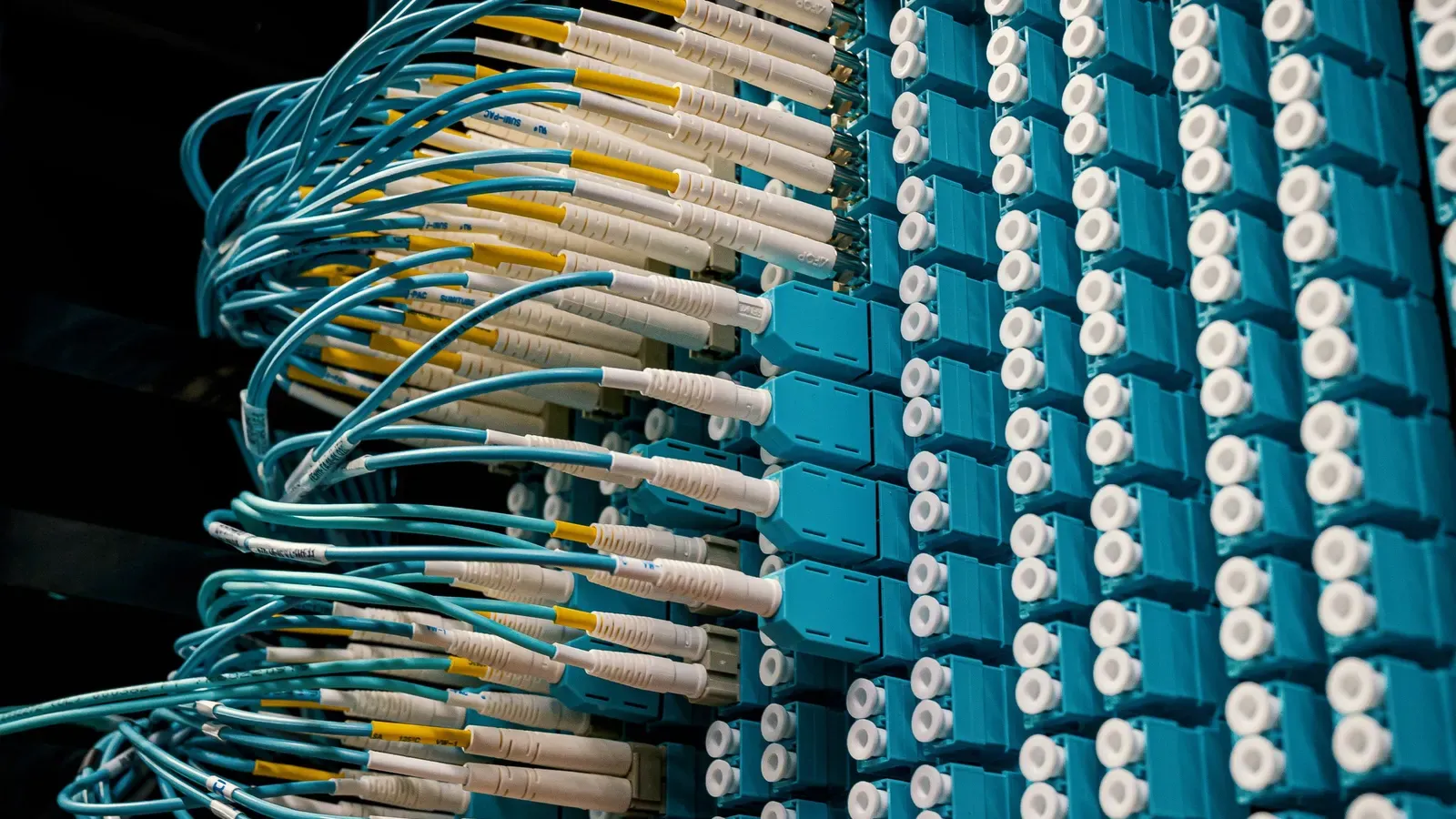
When fiber is the right call
Copper network cable works well for most desks, but it has limits: about 100 meters per run, and it doesn't like electrical noise. Fiber carries data much further and much faster, which makes it the right choice between buildings, between floors and for your network's backbone.
Where we use fiber
Wherever copper runs out of road.
Between buildings
Linking offices on a campus or across a parking lot.
Between floors and closets
A fast backbone connecting the network closets in your building.
Long runs
Anywhere copper can't reach or wouldn't be reliable.
Room to grow
Spare capacity now, so you don't have to pull new cable later.
How a fiber job runs
Survey
We look at the route, the distances and what the fiber needs to connect.
Install
We run, terminate and protect the fiber properly.
Test and document
Every strand is tested and recorded before we hand it over. The records stay with your network documentation, so whoever works on it next knows exactly what's there.
Who does the work, and when fiber isn't needed
Our own Low Voltage Operations team does the work. We're concentrated across Southern California, from Santa Barbara County down to San Diego County, and can be on site anywhere in the US.
Worth running fiber
Offices linking two buildings, several floors or network closets that are far apart, or planning for a lot more capacity in the next few years.
Not always needed
For a single-floor office with short cable runs, good copper cabling is usually all you need. We'll tell you if fiber would be money spent for no real gain.
Frequently asked questions
Is this the same as fiber internet?
Is fiber worth it for a small office?
Is fiber more secure?
Can fiber be upgraded later?
How do we find out if we need fiber?
Start with a free IT check-in
Tell us about your office and what you'd like sorted out. If we're not the right fit, we'll say so.